

California Tomato Harvest Advances with Strong Yields, Solids, and Improving Conditions
Contributing Writers: Robby Force
California’s processing tomato harvest is well underway. Through the week ending August 15, growers statewide had delivered just under 4 million tons. The USDA’s May estimate projected 9.9 million contracted tons for the 2026 season.
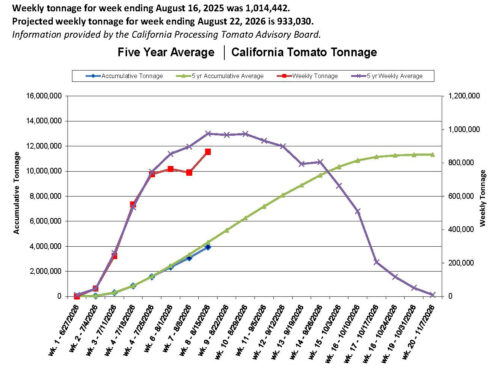
CLFP SOH Report
So far, one of the strongest parts of this year’s crop has been yield. While yields are not as high as last year’s exceptional levels, they remain strong across our growing areas, and current field conditions support a positive outlook for the remainder of the season.
Solids have also performed well. They are running ahead of last year and have remained strong even with good yields. Typically, higher yields can result in lower solids as sugars become less concentrated in the fruit. Seeing both strong yields and solids at the same time is an encouraging characteristic of this year’s crop.
Color has been the greatest challenge this season. The red color in processing tomatoes comes primarily from lycopene, which develops best within a relatively narrow temperature range. When temperatures become extremely hot, lycopene development slows or stops even though the fruit continues to mature. As a result, tomatoes can reach full size and maintain good sugar levels while developing less red color.
A period of extreme heat in early August occurred while a significant portion of California’s crop was ripening. Temperatures across parts of the Central Valley reached 105°F (41°C) or higher for more than a week. During this period, statewide tomato color moved from ahead of recent years to below recent-year levels.
Importantly, this appears to be a temporary weather-related issue rather than a broader crop problem. With temperatures returning closer to seasonal levels, we expect color to improve as fruit that developed after the extreme heat reaches the factories. Our field and factory teams continue to coordinate closely to manage the effects on finished product.
California entered the 2026 growing season with lower water supplies following a relatively dry winter. As summer has progressed, reservoir levels have continued their normal seasonal decline as stored water is released to support agricultural, municipal, and environmental needs.
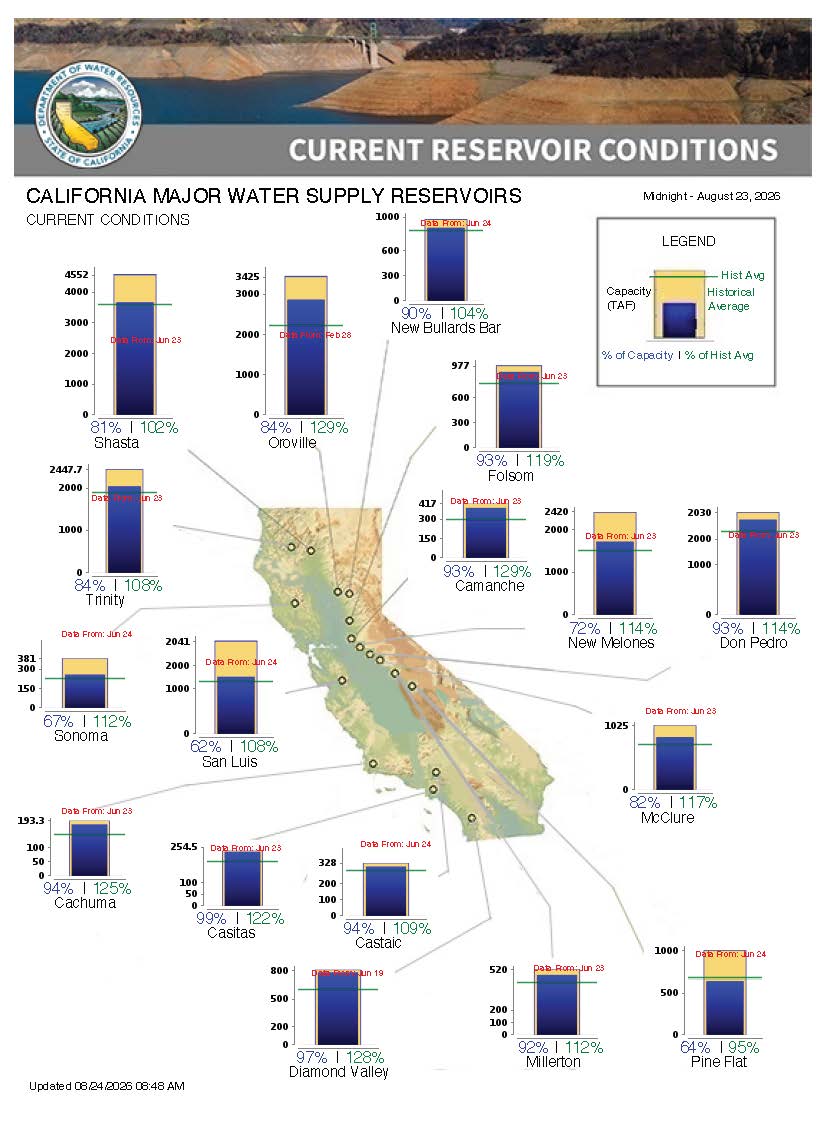
CA Department of Water Resources
As of August 22, statewide reservoir storage was estimated at 13.6 million acre-feet, or approximately 68% of the historical average for this time of year. Water availability remains an important consideration for California agriculture, but the current tomato crop is already well into the growing and harvest season.
With approximately 4 million tons harvested through mid-August, a significant portion of the California crop remains to be processed. Strong yields and solids provide a positive foundation as harvest continues.
Weather will remain an important factor during the final weeks of the season, particularly for fruit color and the pace of ripening. With the extreme early-August heat behind us and temperatures returning closer to normal, we are optimistic that color will improve in the weeks ahead.
Our teams will continue monitoring field conditions, crop quality, and harvest timing closely as we work through the remainder of the 2026 season.
###

Morning Star Newsletter now distributed electronically
As a reminder, Morning Star is now distributing our newsletters electronically using an email distribution vendor called Mailchimp. Your e-version will now include informative Morning Star videos and highlights. Depending on your company’s firewall, these emails may initially be directed to you spam folder.