


California Tomato Production Continues to Advance Through Agricultural Technology and Automation
By: Robby Force
As California agriculture continues to navigate rising production costs and ongoing labor challenges, technology is playing an increasingly important role in maintaining efficiency and long-term sustainability across the processing tomato industry. At Morning Star, investments in agricultural technology remain focused on automation and mechanization as we work to improve operational efficiency, protect grower viability, and support long-term competitiveness across California tomato production.
Like much of agriculture, the California processing tomato sector has experienced significant increases in fertilizer, fuel, equipment, and labor costs over the past several years. These pressures continue to tighten margins across the industry and reinforce the importance of finding practical, scalable solutions that help operations remain efficient without compromising crop quality or yield.
In response, Morning Star continues to evaluate and deploy technologies designed to streamline field operations and reduce dependency on labor-intensive processes. The overall objective is straightforward: do more with less while maintaining the high standards required for large-scale tomato production.
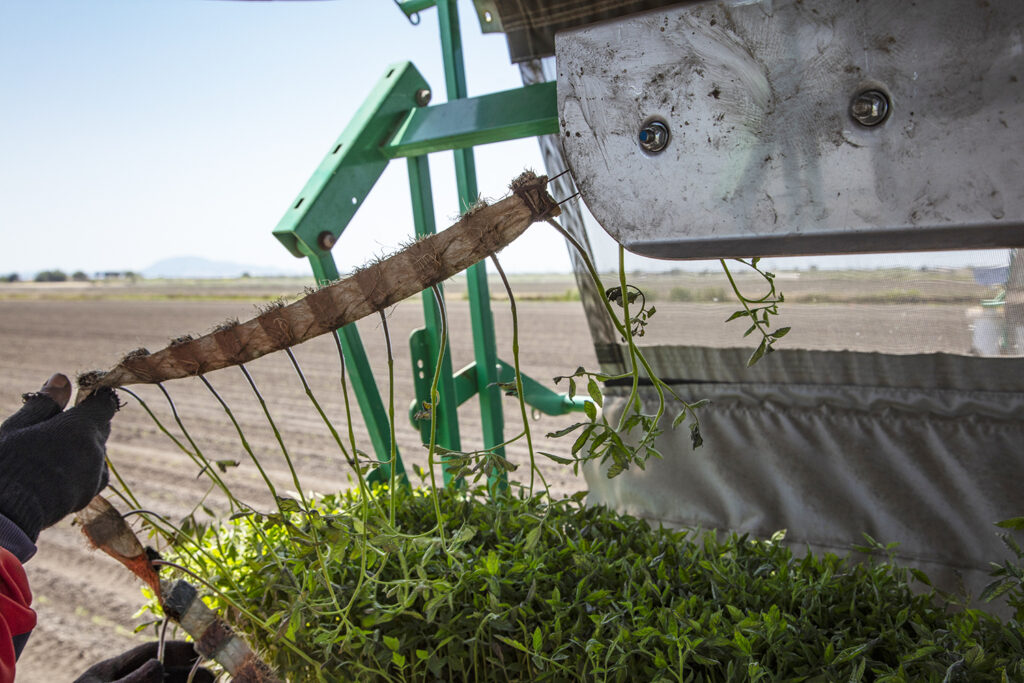 One area seeing continued advancement is transplanting automation. Morning Star deploys automated transplanting services designed to reduce manual labor requirements during planting operations while improving consistency and efficiency across large acreages. As planting schedules continue to face pressure from weather variability and labor availability, automation provides greater operational flexibility during critical stages of the season.
Harvest operations also remain an important focus. Mechanical harvesting technology has long been a cornerstone of California processing tomato production, and Morning Star continues to evaluate and implement harvesting improvements aimed at increasing operational efficiency and reducing labor dependency during peak harvest periods. These efforts help support timely harvest operations across California’s large-scale processing tomato acreage.
Another area gaining momentum is precision weeding technology. Camera-guided and automated weeding systems allow operations to target weeds with greater accuracy while reducing dependence on manual hand-weeding crews. In many applications, these tools can also help reduce herbicide usage, supporting both cost management and broader sustainability efforts across growing operations. 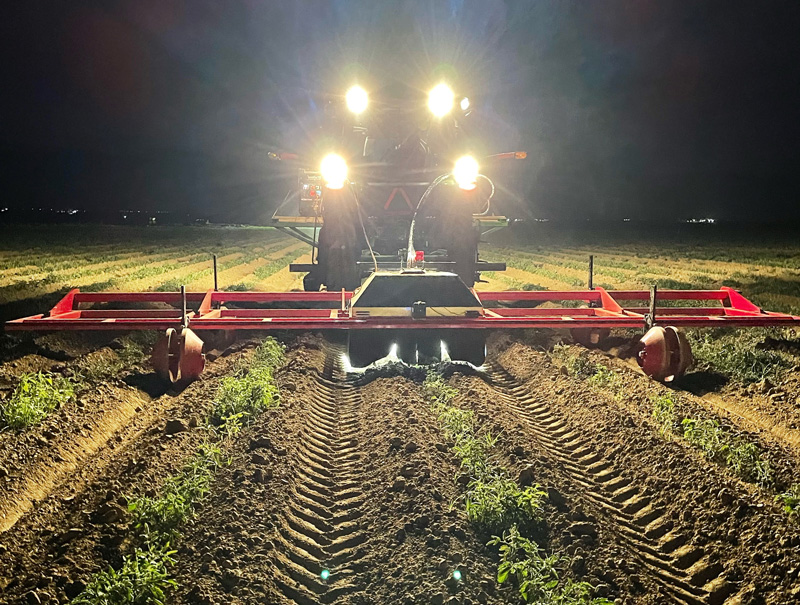
Beyond field-level automation, improvements in fleet management and fuel efficiency continue to play an important role in reducing operational costs. Optimizing equipment usage, transportation logistics, and field operation timing can help lower fuel consumption while improving overall efficiency throughout the growing season.
While technology continues to evolve across agriculture, these advancements are creating new opportunities to improve efficiency, consistency, and long-term sustainability throughout tomato production. At Morning Star, innovation is viewed as a practical tool that works alongside the knowledge of our agricultural and operational teams to support sustainable, efficient, and cost-effective tomato production.
As the industry continues to face rising production costs and operational pressures, investments in automation and mechanization, combined with the expertise of our teams and grower partners, remain among the most effective tools available to help protect grower viability and support the long-term future of California processing tomato production.
###

Morning Star Newsletter now distributed electronically
As a reminder, Morning Star is now distributing our newsletters electronically using an email distribution vendor called Mailchimp. Your e-version will now include informative Morning Star videos and highlights. Depending on your company’s firewall, these emails may initially be directed to you spam folder.