

Q-2 2026 Global Tomato Production Outlook Brief: China, Iran, and California
By: Jake Sherman
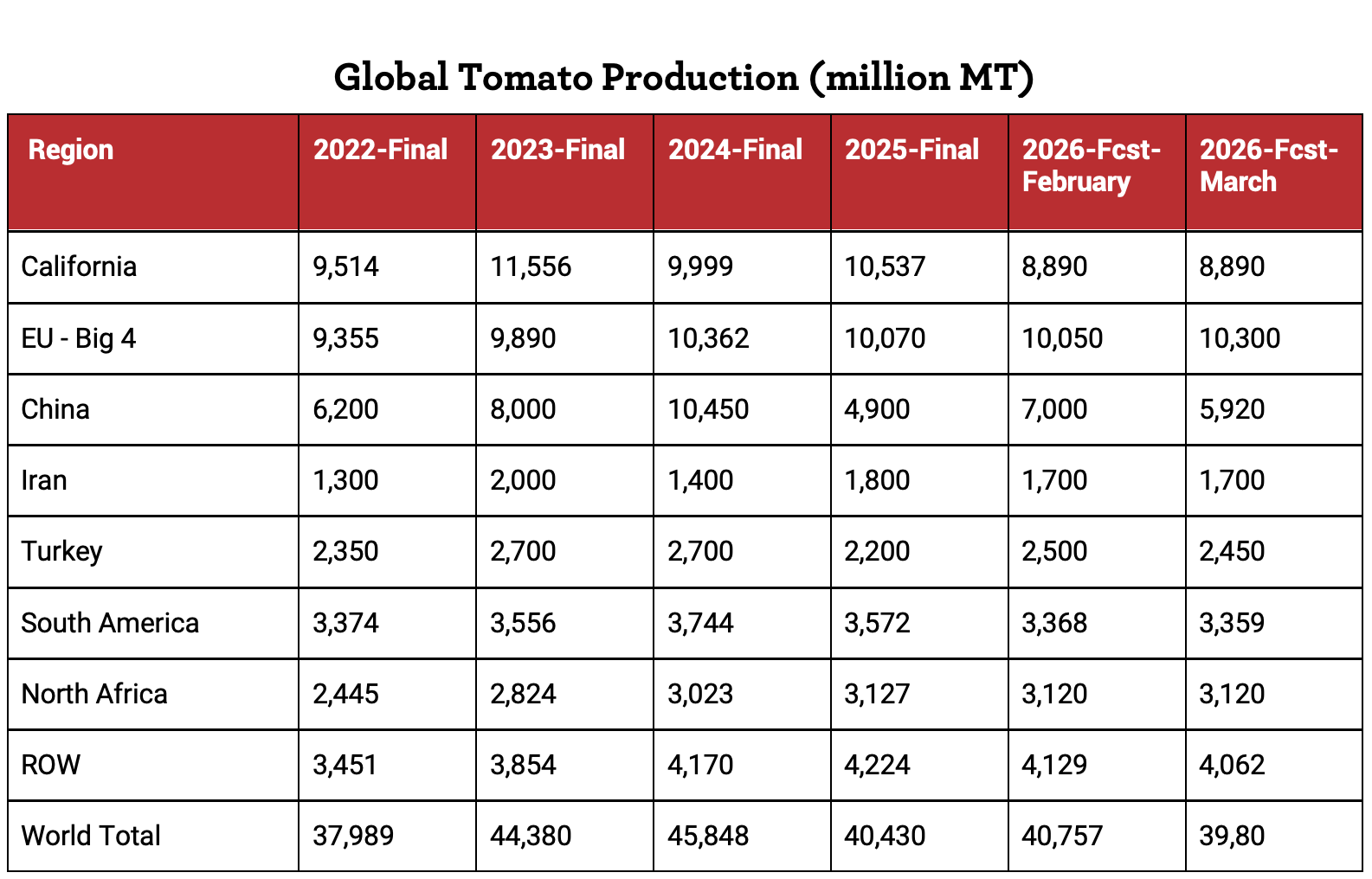
In 2025, China processed 4.9 million metric tons of tomatoes, down substantially from 10.45 million metric tons in 2024. In February, China reported that 2026 production would be 7.0 million metric tons; however, in March, this estimate was revised downward by 1.08 million metric tons to 5.9 million metric tons. This downward revision is largely driven by weak farmer sentiment and expectations of low returns.
China intends to plant 125,193 acres in 2026, which translates to a paid yield of 47.27 metric tons per acre (52.1 short tons per acre). This yield is at risk of being lower due to sandstorms in eastern Xinjiang, Bazhou, and Tarim/Ruoqiang, and because it sits at the upper end of historical ranges. If China instead realizes a paid yield of 45.36 metric tons per acre (50 short tons per acre), total production would decline by approximately 0.22 million metric tons to 5.68 million metric tons.
In 2025, Iran processed 1.8 million metric tons, increasing from 1.4 million metric tons in 2024. In February, Iran reported 2026 production of 1.7 million metric tons and maintained this estimate in March. While this implies a relatively stable outlook, downside risks remain elevated. Iran’s production environment is currently constrained by geopolitical instability, ongoing drought conditions, and energy infrastructure limitations, all of which directly impact irrigation, input availability, and processing capacity. In addition, recent policy actions, including export restrictions may further amplify these downside risks.
In 2025, California processed 10.54 million metric tons of tomatoes, up from 9.99 million metric tons in 2024. In February, California reported 2026 production of 8.89 million metric tons and has held this estimate in the updated forecast released in March. California intends to plant 185,000 acres, which translates to a paid yield of 48.05 metric tons per acre (53 short tons per acre). If yields revert closer to historical norms at 45.36 metric tons per acre (50 short tons per acre), production would decline by approximately 0.5 million metric tons to 8.39 million metric tons.
For 2026, current global production is estimated at 39.8 million metric tons, down 2.34% from 2025 (40.76 million metric tons) and down 11.75% from the record production levels in 2023 and 2024, which averaged 45.1 million metric tons. This lower global output should contribute to inventory rebalancing, moving the industry toward more stable and manageable stock levels after multiple years of oversupply.
###

Morning Star Newsletter now distributed electronically
As a reminder, Morning Star is now distributing our newsletters electronically using an email distribution vendor called Mailchimp. Your e-version will now include informative Morning Star videos and highlights. Depending on your company’s firewall, these emails may initially be directed to you spam folder.